Empowering Nonprofits: Harness AI to Amplify Impact
Nonprofit organizations in the United States face increasing pressure to raise more funds, manage donor relationships efficiently, and secure competitive grant funding, all while operating with lean teams and limited budgets.
AI tools for nonprofit organizations are now transforming:
• Donor management and CRM automation
• Grant research and proposal writing
• Fundraising campaign optimization
• Volunteer coordination
• Impact reporting and compliance tracking
This guide compares the best nonprofit CRM software and AI grant tools based on:
• Pricing transparency
• Donor retention impact
• Fundraising ROI potential
• Integration with accounting systems
• Suitability by organization size
If you’re evaluating nonprofit software for 2026, this buyer-focused comparison will help you choose wisely. See our AI CRM Tools Pricing Comparison for broader CRM automation platforms.
AI for Social Good
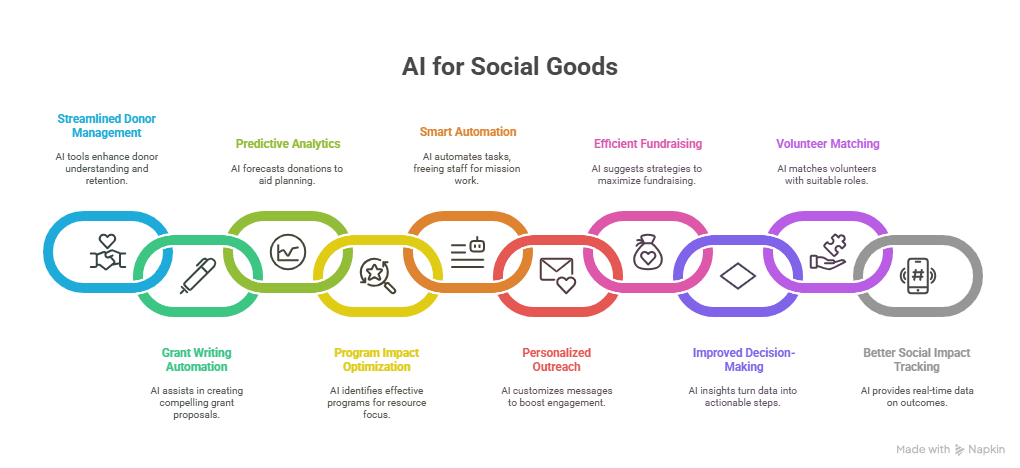
Artificial intelligence (AI) is transforming how nonprofits achieve their missions by amplifying their impact and streamlining operations. AI for social good enables nonprofits to harness advanced data analytics, predictive models, and smart automation, resulting in more effective donor engagement, optimized fundraising, and improved program outcomes. From simplifying donor management and grant writing to personalizing outreach and predicting funding opportunities, AI empowers social impact organizations to do more with less. With the right AI tools, nonprofits can focus on these things:
Streamlined Donor Management: AI-powered CRM tools help nonprofits better understand their donors, personalize interactions, and increase donor retention.
Grant Writing Automation: AI writing assistants can generate compelling grant proposals faster, saving precious time and increasing funding opportunities.
Predictive Analytics: AI analyzes trends and donor behavior to forecast future donations, helping organizations plan ahead.
Program Impact Optimization: Machine learning identifies which programs are most effective, enabling nonprofits to focus their resources wisely.
Smart Automation: Repetitive tasks like data entry, scheduling, and reporting can be automated, freeing up staff for mission-driven work.
Personalized Outreach: AI customizes messages to supporters, boosting engagement and fostering stronger connections.
Efficient Fundraising: AI tools can suggest the best channels and strategies to maximize fundraising success.
Improved Decision-Making: AI insights turn data into actionable steps, helping nonprofits make smarter, evidence-based decisions.
Volunteer Matching: AI can match volunteers with roles that suit their skills, increasing satisfaction and retention.
Better Social Impact Tracking: AI tools provide real-time data on outcomes, helping nonprofits measure and communicate their impact clearly.
Comparison Table: AI Tools for Nonprofit Organizations at a Glance
| Tool | Key Features | Pricing | Best For |
|---|---|---|---|
| Bloomerang | AI donor retention, sentiment analysis | Starts at $99/month | Small to mid-sized orgs |
| Salesforce NP Cloud | Einstein AI predictions, grant tracking | Custom ($$$) | Large nonprofits |
| Grantable | AI grant writing, proposal templates | $49/month | Grant-focused teams |
| Instrumentl | AI grant matching, deadline reminders | $299/month | Research-heavy orgs |
| Kindful | Donor segmentation, automated workflows | $100/month+ | Growing nonprofits |
| DonorPerfect | Predictive analytics, campaign tracking | $99/month+ | All budget sizes |
| Neon CRM | AI engagement scoring, event management | $99/month+ | Community-driven orgs |
| Submittable | AI proposal scoring, collaboration tools | $149/month+ | Teams managing RFPs |
| Foundant GLM | Grant lifecycle automation, impact reporting | Custom | Grant-heavy orgs |
| ClickUp (AI) | AI writing assistant, task automation | $5/user/month | Budget-conscious teams |
How to Evaluate AI Software for Nonprofits (US Buyer Framework 2026)
Before investing in AI tools, nonprofit leaders should evaluate platforms using financial and operational impact criteria — not just features.
1️⃣ Cost vs Fundraising ROI
If your organization raises $2M annually and improves donor retention by just 5%, the revenue impact could exceed $100,000.
Compare annual subscription cost against:
• Retention lift
• Major gift conversion rates
• Grant win rate
• Staff time saved
AI software is often a margin expansion, not an expense.
For income and sales tax compliance tools, see our AI Tax Software Pricing Guide.
2️⃣ Donor Retention & Lifetime Value Impact
Top nonprofit CRMs use AI to:
• Predict donor churn
• Suggest optimal ask amounts
• Personalize outreach timing
Retention improvements of even 3–7% dramatically increase lifetime value.
3️⃣ Grant Writing Efficiency
AI tools reduce:
• Proposal drafting time
• Research hours
• Editing cycles
If your team writes 30 grants annually and saves 6 hours per proposal:
30 × 6 = 180 hours saved
At $35/hour nonprofit staff cost:
$6,300 in annual time savings.
4️⃣ Integration with Accounting & Payroll Systems
Ensure compatibility with:
• QuickBooks
• Stripe
• PayPal
• Salesforce
• Payroll systems
Disconnected software increases administrative friction.
5️⃣ Scalability
A $99/month CRM may work for 500 donors — but what about 25,000?
Choose tools that scale without exponential price increases.
Detailed Breakdown of All 10 AI Tools
1. Bloomerang
Features: Uses AI to predict donor churn, automate thank-you emails, and analyze donor sentiment.
Pros: User-friendly, excellent customer support.
Cons: Limited customization for large orgs.
Pricing: Starts at $99/month.
Alternatives: DonorPerfect, Neon CRM.
Use Case: Automatically flag at-risk donors and trigger personalized re-engagement campaigns.
2. Salesforce Nonprofit Cloud
Features: Einstein AI forecasts donation trends and tracks grant outcomes.
Pros: Integrates with 500+ apps, scalable.
Cons: Expensive; steep learning curve.
Pricing: Custom (starts around $1,500/year).
Alternatives: Bloomerang, Kindful.
Use Case: Predict major gift opportunities using historical donor data.
3. Grantable
Features: AI drafts grant proposals, suggests impactful language, and stores reusable content.
Pros: Saves 50%+ writing time, collaborative.
Cons: Limited to grant writing (no CRM).
Pricing: $49/month.
Alternatives: Instrumentl, ClickUp.
Use Case: Turn bullet points into a polished proposal draft in minutes.
4. Instrumentl
Features: AI matches your mission to grants, tracks deadlines, and manages submissions.
Pros: Massive grant database, intuitive UI.
Cons: Pricier for small orgs.
Pricing: $299/month.
Alternatives: Grantable, Foundant GLM.
Use Case: Discover niche grants you’d otherwise miss.
5. Kindful
Features: AI-driven donor segmentation, automated email campaigns.
Pros: Integrates with Mailchimp, QuickBooks.
Cons: Reporting tools lack depth.
Pricing: Starts at $100/month.
Alternatives: Bloomerang, Neon CRM.
Use Case: Send personalized birthday emails to donors with suggested donation amounts.
6. DonorPerfect
Features: Predictive analytics for fundraising, customizable dashboards.
Pros: Affordable, robust reporting.
Cons: Outdated interface.
Pricing: Starts at $99/month.
Alternatives: Bloomerang, Salesforce.
Use Case: Identify top donors likely to contribute to your next campaign.
7. Neon CRM
Features: AI scores donor engagement, manages events, and tracks memberships.
Pros: All-in-one platform, great for membership orgs.
Cons: Limited AI features compared to others.
Pricing: Starts at $99/month.
Alternatives: Kindful, DonorPerfect.
Use Case: Automatically tag high-engagement donors for VIP event invites.
8. Submittable
Features: AI grades proposal quality, streamlines reviewer workflows.
Pros: Simplifies RFP management.
Cons: Expensive for small teams.
Pricing: Starts at $149/month.
Alternatives: Grantable, Instrumentl.
Use Case: Quickly filter low-scoring proposals to focus on top contenders.
9. Foundant GLM
Features: AI automates grant reporting, tracks impact metrics.
Pros: End-to-end grant lifecycle management.
Cons: Requires training to master.
Pricing: Custom.
Alternatives: Instrumentl, Submittable.
Use Case: Generate impact reports in half the time.
10. ClickUp (AI Add-On)
Features: AI writes grant drafts, creates task lists, and automates workflows.
Pros: Super affordable, versatile.
Cons: Not nonprofit-specific.
Pricing: $5/user/month.
Alternatives: Grantable, Google Workspace.
Use Case: Turn meeting notes into a grant proposal outline instantly.
How to Choose Right AI Tools for Nonprofit Organizations
- Budget: Startups love ClickUp; large orgs may prefer Salesforce.
- Specific Needs: Prioritize grant writing? Try Grantable. Donor retention? Bloomerang.
- Integration: Ensure it works with your email/accounting tools.
- Support: Look for 24/7 chat or training resources.
ROI Example: Mid-Size Nonprofit Raising $3M Annually
Assume:
• 4,000 active donors
• 20% annual churn
• $250 average donation
If AI improves retention from 80% to 85%:
200 additional retained donors × $250 = $50,000 preserved revenue annually.
If CRM software costs $2,400 annually, the net impact exceeds $47,000.
Retention is more valuable than acquisition.
Pro Tips for Maximizing AI Tools for Nonprofit Organizations
- Automate, but personalize: Use AI for drafts, but add human touches.
- Clean your data: Garbage in = garbage out. Update donor records regularly.
- Test free trials: Most tools offer 14–30 days to explore.
How do I Use AI Responsibly for My NonProfit?
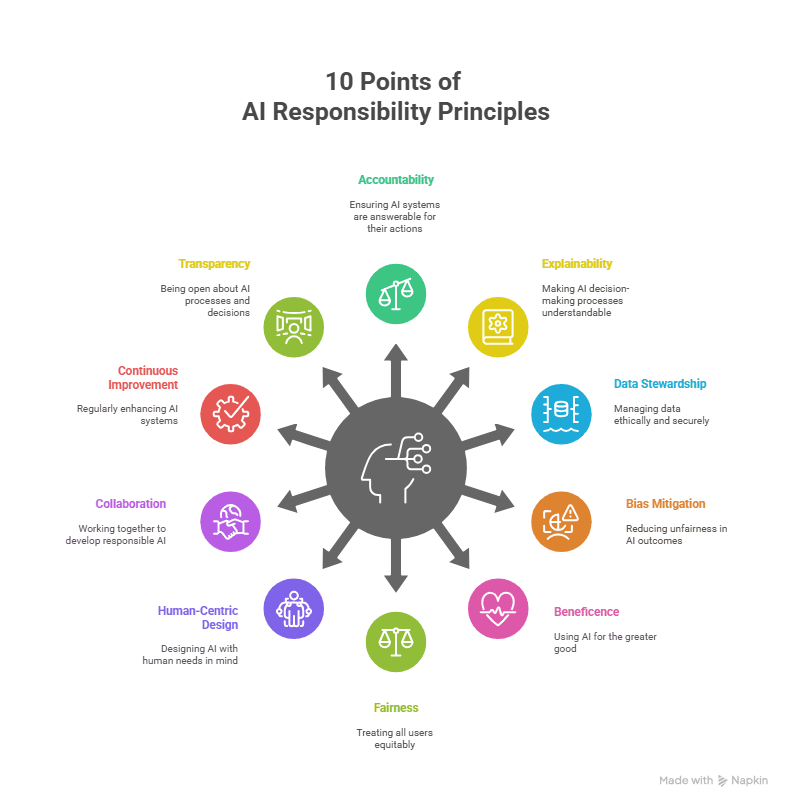
AI can significantly enhance your nonprofit’s impact—from streamlining operations and improving donor engagement to analyzing data for better decision-making. However, using AI responsibly is crucial to avoid unintended harms and build trust. The Fundraising.AI Collaborative has developed a Responsible AI Framework specifically for organizations and professionals in the nonprofit space. Here’s how you can apply it:
1. Accountability
Take full ownership of your AI systems’ outcomes. Establish clear roles and responsibilities for AI governance within your team or board to ensure oversight.
2. Explainability
Choose AI tools that are transparent and can explain how they make decisions. This is essential to maintain trust with your stakeholders and donors.
3. Data Stewardship
Handle data carefully, respecting donor privacy and data protection regulations. Collect only the data you need, and store it securely.
4. Bias Mitigation
Actively identify and address biases in your AI systems. Make sure your AI models don’t inadvertently discriminate against marginalized groups.
5. Beneficence
Ensure your AI initiatives align with your mission and provide tangible benefits to your community or cause.
6. Fairness
Commit to using AI systems that treat all individuals equitably, regardless of background or demographics.
7. Human-Centric Design
Keep humans in the loop. Design AI systems to assist and empower your staff and volunteers rather than replace them.
8. Collaboration
Engage with other nonprofits, stakeholders, and your community to share insights, learnings, and best practices for responsible AI use.
9. Continuous Improvement
AI is a fast-evolving field. Regularly assess and improve your AI systems to ensure they stay effective and ethical.
10. Transparency
Be open about how you use AI and its limitations. Let donors and stakeholders know how AI shapes your decisions.

The Future of AI in Nonprofits
Expect hyper-personalized donor journeys, AI-generated impact stories, and tools that predict community needs before they arise. The key? Balancing automation with the human heart of your mission.
Best AI Tool by Nonprofit Size
Small Local Nonprofit (Under $500K budget)
→ ClickUp AI + Bloomerang
Mid-Size Organization ($500K–$5M)
→ DonorPerfect or Kindful + Grantable
Large Nonprofit ($5M+)
→ Salesforce Nonprofit Cloud
Grant-Focused Foundation
→ Instrumentl + Foundant GLM
Choosing based on budget tier prevents overspending.
Practical Tips for Your Nonprofit
✅ Start small—experiment with low-risk AI applications (like automating simple tasks or generating reports).
✅ Partner with experts or join initiatives like Fundraising.AI Collaborative to stay updated.
✅ Train your staff on AI literacy so they can spot issues and use AI tools confidently.
✅ Regularly review your AI practices to ensure they align with your values.
By following these principles, your nonprofit can harness AI’s power while upholding trust, equity, and mission-driven outcomes.
Conclusion on AI Tools for Nonprofit Organizations
AI software for nonprofits is no longer optional — it is a strategic advantage.
Organizations that invest in donor retention analytics, grant automation, and CRM intelligence:
• Increase fundraising efficiency
• Improve donor lifetime value
• Reduce staff burnout
• Strengthen compliance reporting
• Scale without proportional hiring
The right AI tool can transform fundraising from reactive to predictive.
Start with one high-impact workflow:
Donor retention
Grant drafting
Campaign forecasting
Impact reporting
Measure ROI — then expand.
For finance reporting tools, review our AI Tools for Financial Analysts guide.
FAQs for AI Tools for Nonprofit Organizations
Q: How much does nonprofit CRM software cost in the US?
Most nonprofit CRM platforms range from $99 to $300 per month, while enterprise systems like Salesforce Nonprofit Cloud can exceed $10,000 annually, depending on users and integrations.
Q: What is the ROI of AI tools for donor retention?
Even a 5% improvement in donor retention can increase annual revenue by tens of thousands of dollars for mid-size nonprofits. AI tools help identify at-risk donors and personalize outreach to preserve funding.
Q: Are AI grant writing tools worth it?
If your organization submits 20–40 grant proposals annually, AI writing assistants can reduce drafting time by 40–60%, improving submission volume without increasing staff.
Q: Is nonprofit donor data secure in AI platforms?
Leading nonprofit CRMs use encrypted storage and SOC 2-compliant infrastructure. Always verify vendor security documentation before adoption.
Q: What is the best AI tool for small nonprofits?
Budget-conscious organizations often start with Bloomerang or ClickUp AI, while larger nonprofits may require Salesforce Nonprofit Cloud for advanced automation.
Follow 10 Best AI Tools on LinkedIn for more