
Affordable AI That Cuts Costs and Scales Your Business Smarter
AI software is no longer optional for accounting and bookkeeping firms. In 2026, rising client expectations, tighter IRS compliance requirements, and increasing labor costs are forcing firms to automate repetitive workflows while improving accuracy.
Whether you run a solo bookkeeping practice, a 5-person CPA firm, or a 40-person regional accounting office, choosing the right AI tools can directly impact:
• Billable hours
• Staff productivity
• Client retention
• Profit margins
• Compliance risk
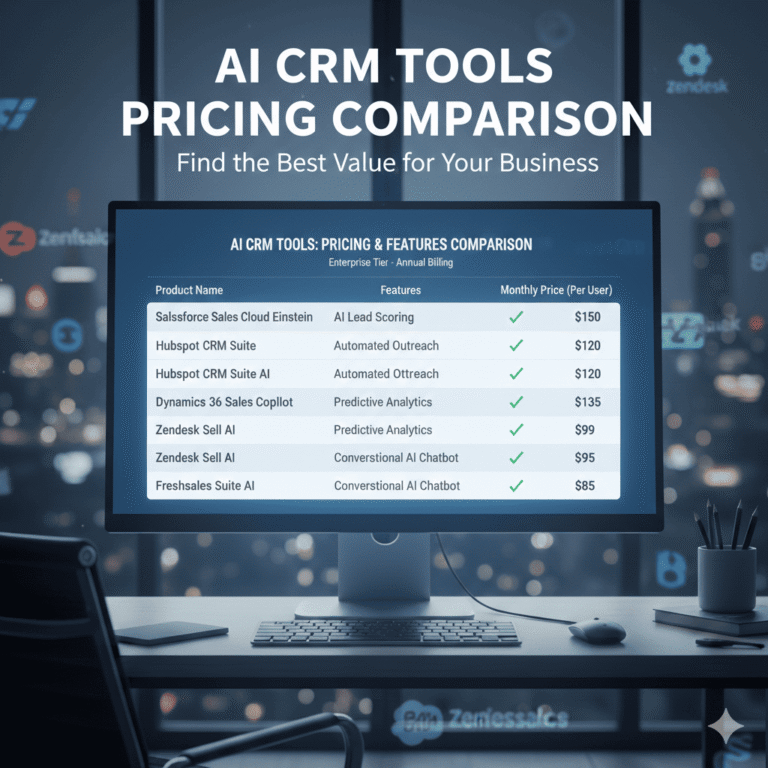
Firms evaluating automation across departments should also review our AI CRM Tools Pricing Comparison for sales and client management software insights.
This guide compares the best AI tools for accounting and bookkeeping firms in the United States, focusing on:
- Pricing transparency
- ROI potential
- Firm size suitability
- Compliance readiness
- Integration with QuickBooks, Xero, and major US tax platforms
Let’s break it down.
Quick Comparison Table: AI Tools for Accounting Firms (2026)
| Tool | Starting Price (Monthly) | Best For | Key Use Case |
|---|---|---|---|
| Vic.ai | Custom ($1500+ est.) | Mid-size firms | AP automation |
| Botkeeper | $69–$299+ | Bookkeeping firms | Automated bookkeeping |
| Dext | $24 | Small firms | Receipt & expense capture |
| Karbon AI | $59/user | CPA teams | Workflow automation |
| Canopy AI | $40/user | Tax firms | Client management + IRS tools |
| Xero AI | $15 | Small businesses | Accounting automation |
| QuickBooks Advanced AI | $200 | Growing firms | Financial reporting |
| Truewind | Custom | Tech startups | AI bookkeeping |
| Taxfyle AI Tools | Custom | Tax firms | On-demand tax work |
| Gusto + AI Payroll | $40 base + $6/user | Firms offering payroll | Payroll automation |
How to Evaluate AI Tools for Accounting & Bookkeeping Firms in 2026
Before selecting any AI software, accounting and bookkeeping firms must evaluate tools through a strategic lens. Not every automation platform is built for financial workflows, and choosing incorrectly can create compliance risk, operational friction, and wasted investment.
Below are the key criteria US-based firms should use when comparing AI accounting tools.
1️⃣ Pricing Structure: Per User vs Per Client vs Volume-Based
AI tools for accounting firms typically fall into three pricing models:
Per User Pricing
Common for workflow and practice management tools like Karbon and Canopy.
Best for:
• CPA firms with defined staff structure
• Firms tracking workload by team member
Watch for:
• Annual billing requirements
• Minimum seat commitments
Per Client Pricing
Common in bookkeeping automation tools like Botkeeper.
Best for:
• Firms with recurring client billing
• Outsourced bookkeeping businesses
Watch for:
• Scaling costs as client count increases
• Volume discounts
Volume-Based Pricing
Often used in accounts payable automation like Vic.ai.
Best for:
• Firms processing thousands of invoices
• Enterprise clients
Watch for:
• Hidden API charges
• Integration fees
Before committing, calculate projected annual cost at full capacity — not just entry-tier pricing.
2️⃣ Integration With US Accounting Ecosystem
Accounting firms in the United States primarily operate within:
• QuickBooks Online
• QuickBooks Desktop
• Xero
• NetSuite
• Gusto
• ADP
• Stripe
• Bill.com
AI tools must integrate cleanly with these systems.
If an AI platform does not sync properly with QuickBooks or Xero, the operational savings disappear.
When evaluating tools, ask:
✔ Does it offer native integration?
✔ Is data synced in real time?
✔ Are reconciliations automatic?
✔ Can reports be exported for IRS audits?
Integration reliability directly impacts ROI.
3️⃣ Compliance & Data Security Standards
Accounting firms handle highly sensitive financial data.
Before adopting any AI solution, verify:
• SOC 2 compliance
• Encryption standards (AES-256 preferred)
• US-based data hosting (if required by client contracts)
• GDPR and CCPA readiness
• IRS publication compliance
Never rely solely on marketing claims. Request official compliance documentation.
4️⃣ Workflow Automation Depth
Some AI tools only automate small tasks like data entry.
Others automate entire workflows.
True workflow automation includes:
• Invoice receipt → Categorization → Approval → Sync
• Client onboarding → Task assignment → Deadline tracking
• Tax document upload → Extraction → Filing checklist
Tools with deeper automation provide exponential time savings.
5️⃣ Advisory & Forecasting Capabilities
The most profitable accounting firms are advisory-driven.
AI tools that include:
• Cash flow forecasting
• Revenue trend analysis
• Profit margin tracking
• Budget simulations
Enable firms to transition from compliance work to strategic consulting.
This dramatically increases client lifetime value.
For deeper forecasting and analytics platforms, explore our AI Tools for Data Analysis guide.
6️⃣ Scalability & Future-Proofing
Choose tools that can scale with your firm.
Questions to consider:
• Can this platform handle 10x invoice volume?
• Does pricing become cost-prohibitive at scale?
• Does it support API access for custom reporting?
• Will it integrate with future ERP systems?
Switching accounting platforms later can disrupt client operations.
Long-term scalability matters more than short-term savings.
7️⃣ Implementation Complexity
Not all AI tools are plug-and-play.
Small firms should prioritize:
• Simple onboarding
• Minimal IT dependency
• Clear training documentation
Mid-size firms may require:
• Dedicated implementation support
• Data migration assistance
• Workflow customization
Implementation time should be factored into ROI projections.
The Real Cost of NOT Using AI in Accounting Firms
Many firms hesitate due to subscription cost concerns.
But consider the alternative.
Manual bookkeeping and tax prep lead to:
• Higher overtime during tax season
• Staff burnout
• Client churn
• Slower turnaround times
• Lower advisory revenue
If automation saves just 10 hours per week:
10 hours × 52 weeks × $85/hour = $44,200 potential annual value.
AI is often an investment in margin expansion — not an expense.
AI Tools vs Hiring Additional Staff: Cost Comparison
Let’s compare.
Hiring a junior accountant:
• Salary: $55,000–$70,000 annually
• Payroll taxes & benefits
• Training costs
• Turnover risk
AI automation stack:
• $6,000–$15,000 annually depending on firm size
While AI does not replace professional expertise, it can reduce the need for additional headcount during peak seasons.
For many firms, automation delays hiring by 1–2 years.
Key Questions to Ask Before Purchasing
Before signing any contract, firm partners should ask:
- What workflow are we trying to automate?
- What is our expected monthly time savings?
- How will we measure ROI?
- What compliance documentation is available?
- How difficult is it to migrate away later?
- Does this tool support our advisory strategy?
Clarity before adoption prevents overspending.
Summary: Smart Evaluation Before Selection
AI tools for accounting and bookkeeping firms vary widely in pricing, complexity, and value.
The right tool depends on:
• Firm size
• Client type
• Revenue model
• Compliance needs
• Advisory ambitions
In the next section, we break down the best AI tools for accounting firms in the United States, including pricing, use cases, and which type of firm each tool is best suited for.
Let’s examine them one by one.
1️⃣ Vic.ai — AI Accounts Payable Automation
Best for: 10+ employee accounting firms
Vic.ai uses machine learning to automate invoice coding, approvals, and reconciliation.
Pricing
Custom pricing. Typically starts around $1,500 per month depending on invoice volume.
Why It Matters
• Reduces AP processing costs by up to 60%
• Improves audit trail documentation
• Minimizes manual data entry errors
ROI Example
If your firm processes 3,000 invoices monthly and spends 2–3 minutes per invoice, automation can save 100+ hours monthly.
At $75/hour billable rate, that’s $7,500+ productivity value.
2️⃣ Botkeeper — AI-Powered Bookkeeping
Best for: Small to mid-size bookkeeping firms
Botkeeper combines machine learning with human oversight to automate reconciliations and transaction categorization.
Pricing
Starts around $69 per client per month. Higher tiers scale into $299+ range.
Ideal Use Case
• Firms managing 20–200 recurring bookkeeping clients
• Outsourced bookkeeping providers
• Firms needing scalable automation
Botkeeper integrates with QuickBooks and Xero, making it practical for US bookkeeping businesses.
3️⃣ Dext — Receipt & Expense Automation
Best for: Solo CPAs and small firms
Pricing
Starts at $24 per month.
What It Does
• Captures receipts automatically
• Extracts line-level expense data
• Syncs with accounting software
This tool reduces client back-and-forth during tax season and improves documentation accuracy.
4️⃣ Karbon AI — Workflow & Practice Management
Best for: 5–50 person accounting firms
Karbon is a practice management system enhanced with workflow automation and AI task routing.
Pricing
Starts at $59 per user per month.
Why It’s Valuable
• Assigns tasks based on workload
• Automates recurring deadlines
• Improves team visibility
Accounting firms often lose revenue due to missed follow-ups. Automation protects recurring billing.
5️⃣ Canopy AI — Tax Resolution & Client Management
Best for: Tax-heavy CPA firms
Pricing
Starts at $40 per user per month.
Key Strength
• IRS transcript retrieval
• Tax resolution tracking
• Secure client communication
For firms handling IRS disputes or tax resolution cases, automation reduces risk and improves documentation accuracy.
6️⃣ QuickBooks Advanced AI
Best for: Growing firms managing mid-sized clients
Pricing
Starts around $200 per month.
AI Features
• Automated cash flow forecasting
• Revenue trend detection
• Smart reporting
If your firm advises small businesses, predictive reporting increases advisory revenue potential.
7️⃣ Xero AI
Best for: Startup-focused accounting firms
Pricing
Starts at $15 per month.
Value Proposition
• Automated bank reconciliation
• Real-time reporting
• Smart invoice matching
Great for firms serving startups and small ecommerce brands.
8️⃣ Truewind — AI for Tech Startups
Best for: VC-backed startup accounting
Pricing
Custom.
Truewind automates bookkeeping specifically for startups using Stripe, Brex, Ramp, and SaaS stacks.
This is a niche but high-margin for firms serving tech clients.
9️⃣ Gusto AI Payroll Automation
Best for: Firms offering payroll services
Pricing
$40 base + $6 per employee.
Payroll automation reduces compliance errors and recurring administrative tasks.
If your firm also manages HR or payroll advisory, see our AI Tools for HR Managers comparison.
🔟 Taxfyle AI
Best for: Firms needing seasonal capacity
Taxfyle allows firms to outsource overflow tax work.
Helps during tax season surge without hiring full-time staff.
How to Choose the Right AI Tool for Your Accounting Firm
1️⃣ Firm Size
Solo CPA
Focus on Dext + QuickBooks automation.
5–10 Staff Firm
Consider Karbon + Botkeeper.
20+ Staff Firm
Evaluate Vic.ai or enterprise-grade automation.
2️⃣ Revenue Model
Compliance-focused firm
Prioritize automation + audit trails.
Advisory-focused firm
Choose tools with forecasting and predictive reporting.
3️⃣ Client Type
Startup clients
Truewind + Xero.
Traditional SMB clients
QuickBooks + Dext.
High-net-worth or IRS cases
Canopy.
ROI Calculation Example for a 10-Person CPA Firm
Assume:
• 300 monthly recurring bookkeeping clients
• 2 hours saved per client monthly
• $85 average billable rate
Savings:
300 × 2 hours × $85 = $51,000 productivity capacity monthly.
Even if only 25% converts to billable work, that’s $12,750 potential revenue uplift.
Automation is not cost — it is margin expansion.
Cost vs Benefit Analysis: Small vs Mid-Size Firms
Solo Bookkeeper (1–2 People)
Average revenue: $120,000–$250,000 annually
Main pain: time overload
Recommended stack:
• Dext ($24)
• QuickBooks AI ($200 if needed)
Expected monthly savings: 20–30 hours
Value: $1,500–$2,500 time savings per month
5–10 Person CPA Firm
Average revenue: $750,000–$2M annually
Main pain: workflow coordination + tax season surge
Recommended stack:
• Karbon ($59/user)
• Botkeeper ($69–$299/client)
• Canopy ($40/user)
Estimated automation impact:
• 25–35% workflow acceleration
• Reduced overtime during tax season
20+ Person Firm
Average revenue: $5M+
Main pain: scaling without hiring
Recommended stack:
• Vic.ai
• Enterprise workflow automation
• Predictive forecasting tools
Enterprise AI reduces labor expansion while increasing client capacity.
Compliance & Security Considerations
Accounting firms must evaluate:
• SOC 2 certification
• Data encryption standards
• IRS data handling policies
• Client portal security
Never adopt AI tools without verifying US data compliance standards.
Deep Dive: AI in Tax Season Automation (Critical Revenue Lever)
Tax season is the most intense operational period for US accounting firms.
Common bottlenecks:
• Missing client documents
• Manual data extraction
• IRS transcript delays
• Staff burnout
AI can:
✔ Extract data from W-2s and 1099s
✔ Auto-organize client documents
✔ Flag inconsistencies
✔ Forecast filing workload
If your firm processes 500 returns per season and saves 20 minutes per return:
500 × 20 minutes = 10,000 minutes
= 166 hours saved
At $90/hour effective billing value → $14,940 seasonal productivity impact.
Client communication automation during tax season can also benefit from tools featured in our AI Tools for Customer Support guide.
AI + Advisory Services: The Real Revenue Multiplier
Many firms still operate in compliance mode.
The real money is in advisory.
AI forecasting tools enable:
• Cash flow projection
• Profitability modeling
• Scenario analysis
• Budget forecasting
If you convert just 10 bookkeeping clients into advisory retainers at $750/month:
10 × $750 = $7,500 recurring revenue.
Automation frees capacity for higher-value advisory work.
Many of these platforms also appear in our AI Tools for Small Businesses Under $100 guide for cost-conscious firms.
Pricing Breakdown: What Firms Actually Pay Annually
Let’s model realistic annual cost ranges.
Small Firm Stack Example
Dext: $24 × 12 = $288
QuickBooks Advanced: $200 × 12 = $2,400
Karbon (5 users): $59 × 5 × 12 = $3,540
Total annual investment: ~$6,200
If this saves 10 hours/week at $80/hour:
10 × 52 × $80 = $41,600 productivity capacity
Return far exceeds cost.
Mid-Size Firm Stack Example
Karbon (15 users): ~$10,620 annually
Botkeeper (100 clients avg $100): ~$120,000 annually
Canopy (10 users): ~$4,800
Total: ~$135,000 annually
If firm revenue increases from 3M to 3.6M via efficiency and upsells, automation pays for itself.
Risk Management & AI Governance for Accounting Firms
Because accounting deals with financial data, AI adoption must be governed carefully.
Firms should implement:
• Internal AI usage policies
• Client disclosure statements
• Data encryption verification
• Vendor security audits
Important: Always verify SOC 2 compliance before onboarding enterprise AI tools.
AI Tools by Accounting Specialization
Bookkeeping-Focused Firms
Prioritize:
• Botkeeper
• Dext
• QuickBooks AI
Tax-Heavy Firms
Prioritize:
• Canopy
• Taxfyle
• AI document extraction tools
Audit Firms
Prioritize:
• Predictive analytics
• Fraud detection AI
• Automated anomaly detection tools
Startup-Focused Firms
Prioritize:
• Truewind
• Xero AI
• SaaS expense automation
Competitive Advantage: AI as a Differentiator
Clients increasingly compare firms based on:
• Technology stack
• Reporting speed
• Transparency
• Advisory capabilities
Marketing your firm as “AI-powered accounting” can:
✔ Increase client acquisition
✔ Justify higher pricing
✔ Attract tech-forward businesses
Implementation Roadmap for Accounting Firms
Adopting AI should be phased.
Phase 1: Identify Bottleneck
Choose one repetitive workflow.
Phase 2: Pilot With 10 Clients
Measure:
• Time saved
• Error reduction
• Client feedback
Phase 3: Expand Across Firm
Train staff and document processes.
Phase 4: Upsell Advisory Services
Leverage freed capacity for higher-value offerings.
Best AI Tool by Firm Type
Solo Bookkeeper → Dext
Small CPA Firm → Botkeeper
Mid-size Firm → Karbon
Enterprise Firm → Vic.ai
Tax-heavy Firm → Canopy
Startup-focused Firm → Truewind
Why Accounting Firms Are Rapidly Adopting AI in 2026
The accounting industry in the United States is undergoing structural change.
Three forces are driving AI adoption:
1️⃣ Labor Shortage
The AICPA reports a continuing decline in accounting graduates. Many firms struggle to hire junior staff while workload continues to grow.
AI fills operational gaps without increasing payroll.
2️⃣ Margin Compression
Clients expect:
- Fixed-fee pricing
- Faster turnaround
- Real-time dashboards
- Advisory insights
Firms that rely purely on manual bookkeeping face shrinking margins.
Automation protects profit.
3️⃣ Compliance Complexity
New reporting requirements, sales tax automation, payroll rules, and IRS documentation standards increase administrative burden.
AI tools reduce compliance errors and audit exposure.
Where AI Creates the Most Impact in Accounting Firms
Before choosing tools, identify where automation produces the highest ROI.
Accounts Payable Automation
Manual invoice coding wastes time and introduces errors. AI categorizes and routes invoices instantly.
Bank Reconciliation
Smart reconciliation reduces mismatched transactions and month-end backlog.
Payroll Processing
AI reduces tax miscalculations and filing penalties.
Tax Preparation
Automated document extraction reduces data entry.
Advisory Reporting
Predictive analytics allows firms to upsell financial forecasting.
Future of AI in Accounting (2026–2030 Outlook)
Expect rapid evolution in:
Real-Time AI Audit Assistance
Continuous compliance monitoring.
AI-Powered Fraud Detection
Automated anomaly flagging.
Voice-Based Financial Queries
Clients asking financial dashboards via voice AI.
Hyper-Personalized Tax Optimization
AI suggests tax strategies in real-time.
Firms that delay adoption risk falling behind competitors offering faster turnaround and advisory insights.
Common Mistakes Accounting Firms Make When Adopting AI
❌ Buying too many tools at once
❌ Ignoring training
❌ Over-automating client communication
❌ Failing to verify compliance standards
❌ Not calculating ROI
AI is most powerful when implemented strategically, not impulsively.
Frequently Overlooked Revenue Opportunities With AI
• Packaging AI-enhanced monthly reports
• Offering “AI-powered forecasting” as a premium service
• Bundling payroll + bookkeeping automation
• Offering virtual CFO services
Automation increases capacity. Capacity enables expansion.
Final Strategic Recommendation
If you are unsure where to begin:
Start with expense automation (Dext).
Then add workflow management (Karbon).
Then layer forecasting or advisory AI.
Do not attempt enterprise automation on day one.
Build stack maturity gradually.
For deeper comparisons, explore:
AI Tools for Email Marketing
AI Tools for Customer Support
AI Tools for Data Analysis
AI Tools for HR Managers
These guides provide more function-specific comparisons.
Frequently Asked Questions
Are AI accounting tools IRS-compliant?
Most major tools follow US data security standards, but firms must verify compliance before deployment.
Can AI replace bookkeepers?
No. AI automates repetitive reconciliation tasks but does not replace professional judgment.
How long does implementation take?
Small tools like Dext can be implemented within a day.
Enterprise tools may require 2–4 weeks.
Is AI worth it for firms under $500K revenue?
Yes. Even saving 10–15 hours monthly offsets subscription costs.
Final Thoughts
AI adoption in accounting is no longer experimental. It is a competitive necessity.
Firms that automate:
• Increase margins
• Improve compliance
• Deliver faster reporting
• Reduce burnout
• Scale without proportional hiring
In 2026, the firms that thrive will not be those with the largest teams — but those with the smartest automation stack.
If you run an accounting or bookkeeping firm in the United States, start with one workflow:
Invoice processing
Reconciliation
Payroll
Tax prep
Client communication
Automate it. Measure ROI. Expand from there.
Your margin depends on it.